
Demonology
The Grammar of the Unseen
A Demonology Rooted in Text and Tradition
A demonology built from the sources rather than the legends, asking what the oldest texts actually say about hostile spirits, in what language, at what date, and for whose purposes.
- Pages
- 364
- Chapters
- 21
- Parts
- 6
- Publishes
- Nov 13
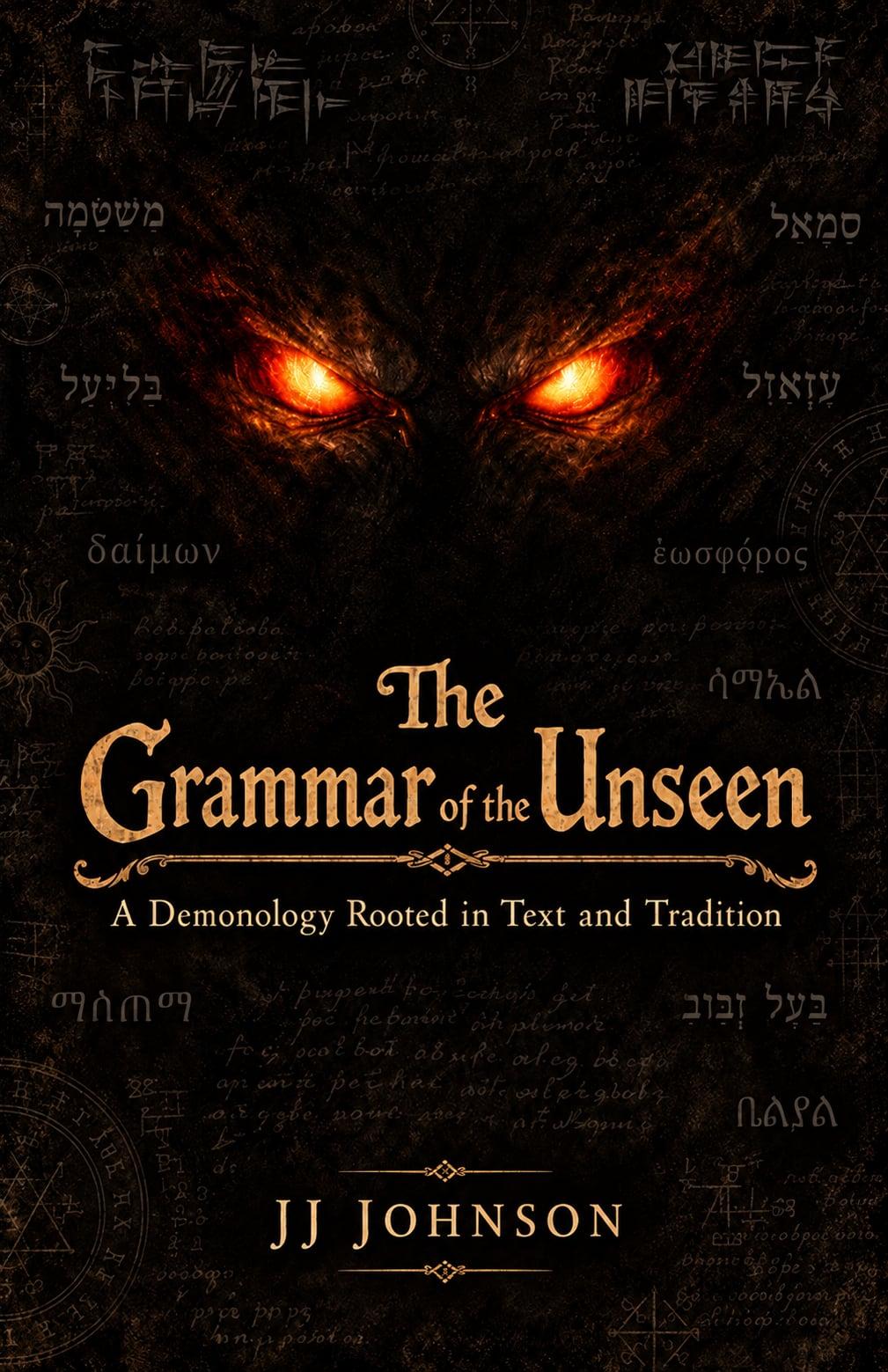
What the book is doing.
Anyone who has listened to Southern Demonology for long knows the pattern by now: somebody repeats a confident claim about the ancient world, I go hunting for the source, and the source turns out to be much later than advertised or a good deal stranger than the claim. The Grammar of the Unseen is what happens when that habit gets a few hundred pages and a bibliography. Rather than deciding what a demon is and then searching ancient literature for confirmation, the book asks what each text actually says, in what language, at what date, and for whose purposes; and only then lets any later system try to explain the passage.
The route begins with Mesopotamian ritual texts and a Hebrew Bible that is notably restrained about hostile spirits, moves through the Book of Watchers, Jubilees, and the Dead Sea Scrolls; and continues into the Gospels, Paul, the early church, the Roman Ritual, and the Ethiopian Orthodox tradition of the debtera. Across that distance a fairly sparse biblical vocabulary grows into an elaborate demonology, and watching that growth happen one source at a time requires keeping the chronology straight, because reading the later system backward into the earlier texts is the most common mistake in this field.
I should say plainly what kind of book this is, since the subject invites misunderstanding in both directions. The book is neither a catalog of demons nor a manual of techniques; the closer description is a work of spiritual literacy, written for readers who would rather meet the sources than the legends. I take spiritual danger seriously, and the later parts on access, exorcism, and protection reflect that seriousness, although taking the danger seriously has never seemed to me a good reason to pretend that a nineteenth century occult handbook preserves second century practice.
Six parts, twenty-one chapters.
- PART I
Foundations
- 1Why “Grammar,” Why “Unseen,” and Why This Book?
- 2The Ancient Near Eastern World of Gods, Ghosts, and Demons
- 3The Hebrew Bible and the Problem of “Unclean Spirits”
- PART II
Second Temple Judaism
- 4Why Second Temple Demonology Cohered
- 5Watchers, Giants, and the Birth of Demons
- 6Names, Offices, and the Architecture of Opposition
- 7Demonology at Qumran: Liturgy, Calendar, and Community
- PART III
The New Testament
- 8Jesus and the Demons: Authority, Conflict, and the Kingdom
- 9Possession, Oppression, Affliction: Diagnosis and Discernment
- 10Powers and Principalities: Paul’s Cosmic Vocabulary
- PART IV
Patterns and Access
- 11What Demons Want: Telos, Tactics, and the Slow Work of Consent
- 12Manifestation and Mimicry
- 13Encroachment and the Architecture of Deception
- 14Persons, Places, and Things: How “Access” Gets Talked About
- 15Authority, Discernment, and the Ethics of Spiritual Defense
- PART V
Exorcism
- 16Ancient Exorcism Traditions
- 17Christian Exorcism: Then and Now
- 18Protection Without Obsession
- PART VI
Modern Misunderstandings
- 19Horror Films and Demonology
- 20The Internet Age of Demon Obsession
- 21Why Discernment Matters More Than Knowledge
An introduction and a conclusion frame the chapters, and the volume closes with a full bibliography.
Where to go from here.
- Read an excerptThe opening of Chapter 1, on why a book about demons needs the language of grammar.
- Join the launch listRetailer pages appear at demonword.com as they go live, and the list will send word when they do.
- How Evil Got OrganizedThe Season 8 arc, which works through several of the Second Temple sources behind Part II.